For most CPG leaders, the question isn’t whether to invest in trade, it’s how to make sure it pays back.
Every year, billions are spent on promotions, displays and activations designed to win at the shelf. But here’s the uncomfortable truth: if you can’t see what actually happened in-store, you can’t measure your return.
In 2025, commercial performance isn’t just driven by brand strength or brilliant promotions, it’s driven by execution visibility. What happens on the shelf, in the cooler or at the counter directly determines whether your commercial bets deliver ROI.
And yet, most brands still treat retail execution data as a series of fragmented snapshots, disconnected from RGM, TPM and the broader commercial strategy.
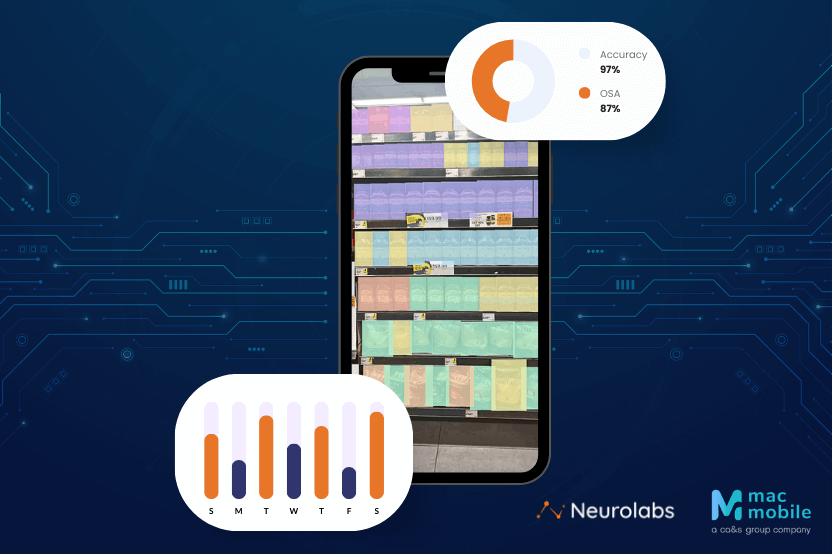
That’s where Image Recognition (IR) changes the picture. By translating shelf photos into live, SKU-level data, it gives CPGs a real-time view of execution performance across channels and connects it directly to commercial outcomes.
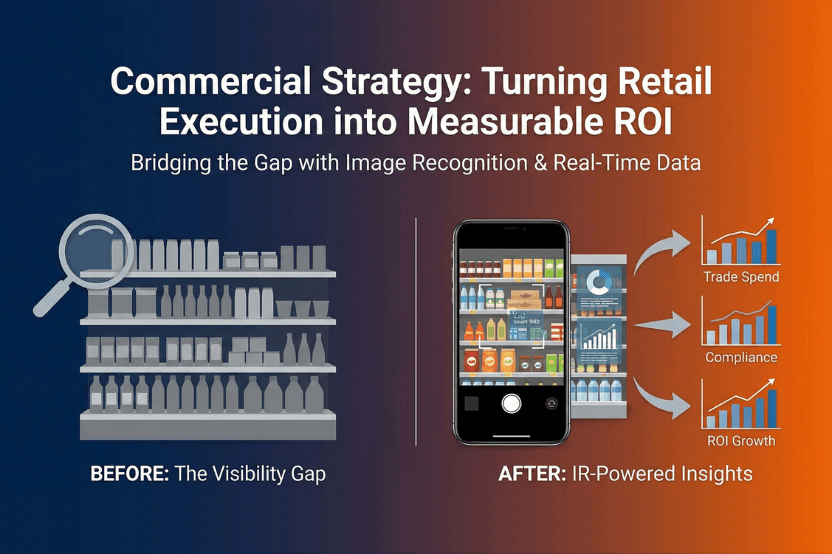
The Visibility Gap
The gap between what’s planned and what’s executed is often far bigger than we think.
One global beverage company assumed that 90% of its promotions were executed in-store. When they finally captured visibility, the real number was closer to 52%. That 40-point gap explained why uplift never matched expectations, despite flawless plans and heavy investment.
Across categories, the story repeats:
- Persistent visibility gaps: Planogram non-compliance is common. Displays are often missing, mis-shelved or even occupied by competitor products.
- Data latency: Syndicated data from Circana or Nielsen lands 3–4 weeks late. By the time the results arrive, the campaign is over.
- Fragmented insights: RGM, trade and category teams spend days stitching together reports from EPOS, distributors and field teams to reconstruct what happened.
- ROI blind spots: Up to 40% of trade spend goes unverified. The photos exist but rarely translate into measurable commercial insight.
As one trade marketing director told me recently: “We’re flying blind until the Nielsen data comes in and by then it’s too late to act.”
From Plan To Proof
Many CPGs are now reframing how they view commercial execution. One of the largest global players captured it perfectly in its vision statement:
“Enhance our Route To Market strategies by leveraging Image Recognition and AI to provide accurate visibility at scale and actionable insights into our Market, Customers and our Business, to improve execution and grow revenue.”
That’s exactly what IR enables. It doesn’t just help you see the shelf, it lets you prove whether your investments actually executed and delivered a return.
For RGM and TPM teams, this becomes transformative:
- RGM can validate pricing, elasticity and promotional effectiveness while campaigns are still live, not six weeks later.
- TPM can tie spend directly to verified execution, identifying which activations and store types drive the best ROI.
IR shifts commercial management from being plan-based to reality-based. It replaces assumptions with proof and turns execution visibility into a measurable growth lever.
Quick Wins
Once shelves are digitised, accountability becomes instant. IR delivers the kind of commercial visibility that turns spend into strategy:
- Promotion & display compliance – confirm every activation is in place and compliant. Verified placements can drive +25–30% sales lifts but only when executed correctly.
- Price & promo accuracy – identify pricing errors before they hurt margin. One confectionery brand discovered 15% of promotional prices were misapplied, a silent drain on profitability.
- Innovation tracking – monitor new SKUs through their launch window to ensure they’re listed, displayed and not displaced.
- Category & competitor benchmarking – understand share of shelf, innovation activity and competitor visibility in real time.
- TPM validation – tie compliance directly to spend approval, automating the “proof of execution” process.
In practice: A leading beverage company rolled out IR across its convenience channels to verify promotional compliance. Field teams now receive immediate feedback after setup, boosting execution rates and enabling real-time reallocation of promotional budgets, improving ROI mid-campaign instead of post-mortem.
From Visibility To Value
When IR data flows into RGM and TPM systems, execution visibility becomes a strategic growth driver, not just a diagnostic tool.
- Link execution to trade ROI: Measure uplift based on what actually happened, not what was planned. One energy brand now correlates display compliance with POS lift in near real time, recovering 8–10% of lost ROI.
- Dynamic investment reallocation: Redirect spend toward high-performing stores and campaigns while they’re live.
- Category & assortment optimisation: Bring verified shelf data to retailer negotiations, using evidence to defend space and shape future assortments.
- Retailer collaboration & JBP: Share image-backed insights with retail partners to build trust and align investments around proven performance.
- Forecasting that reflects reality: Feed verified execution and availability data into demand models to reduce volatility and improve accuracy.
In practice: A global CPG integrated IR signals from shelf, cooler and backroom locations directly into its demand planning system. Replenishment accuracy rose from 88% to 92%, eliminating chronic over/under-ordering and recovering millions in working capital.
A New Edge in Competitive Intelligence
Beyond compliance, IR gives brands a real-time competitive advantage, something traditional data sources simply can’t match.
- Track competitor promotions and activations as they happen.
- Capture local pricing intelligence to adjust dynamically.
- Identify which display types and pack formats perform best by channel or geography.
This turns execution visibility into a live feed of category intelligence, enabling faster, evidence-based commercial decisions.
Integration in the Real World
The good news? This no longer requires a heavy IT lift. The most effective CPGs don’t add another platform, they embed IR directly into their existing stack:
- Sales Force Automation (SFA): deliver instant execution feedback to field teams.
- TPM systems: integrate verified compliance into trade spend validation workflows.
- RGM & BI tools: connect execution data to POS and elasticity models for margin optimisation.
- Data lakes & MDM: consolidate IR data with broader analytics pipelines for unified reporting.
Integration timelines that once took months now take weeks. The difference is that IR has become a plug-in capability, not a standalone system.
Why It Matters
When you link execution visibility to commercial strategy, the outcomes are tangible and measurable:
- Revenue growth: capture every on-shelf opportunity and validate which promotions truly drive ROI.
- Cost optimisation: stop spending on what doesn’t work and redirect that investment to what does.
- Compliance & trust: build stronger retailer partnerships with image-backed truth.
As one RGM director told me: “We’ve gone from hoping our promotions worked, to knowing they worked and knowing why.”
Why Now
Three forces are making IR-powered commercial strategy a necessity, not a luxury:
- Pressure on trade spend: tighter budgets demand in-flight optimisation and verified execution proof, not post-event reports.
- IR maturity: accuracy, speed and SKU onboarding have advanced dramatically; insights now arrive while the campaign is live.
- API-first integration: IR data plugs directly into existing systems, transforming visibility into action seamlessly.
In short, the technology has caught up with the commercial need and the timing couldn’t be better.
Wrapping Up the Series
This article closes out our series on the Four Strategic Levers of Retail Execution in 2025.
If you missed the earlier instalments, start with From Compliance to Growth: Why Smarter Audits Drive Retail Execution, where I explored how intelligent audit automation creates visibility and speed across the shelf.
Then explore Field Force Optimisation: From Data Collectors to Sales Drivers and Inventory Optimisation: Closing the Loop Between Shelf and Supply Chain, where we looked at connecting execution to operations.
In this final piece, we’ve come full circle, showing how Image Recognition connects every element of retail execution to commercial impact and measurable ROI.
It’s an exciting time for CPGs that want to run smarter, leaner and more connected businesses. The brands that win next year won’t be the ones that spend the most, but the ones that see the most.
Remus Pop, CRO & Co-Founder