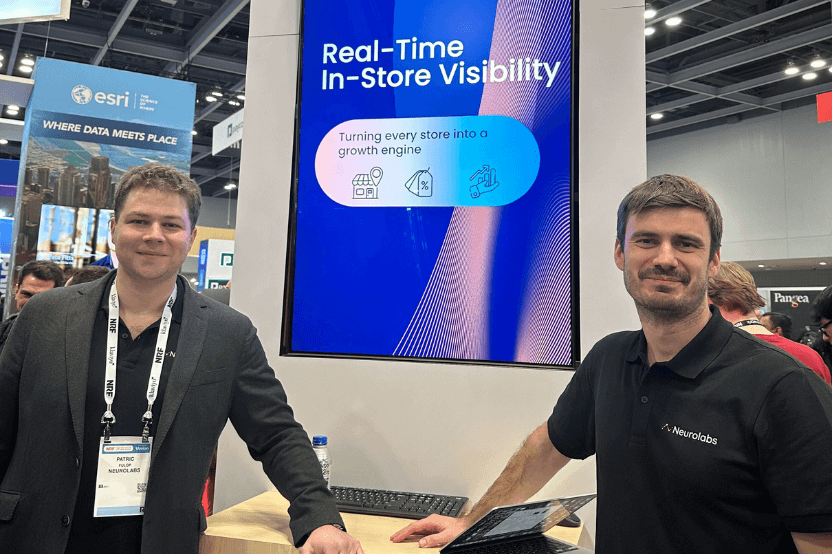
In January, our co-founders Patric Fulop and Remus Pop spent several days on the ground at NRF 2026 in New York, hosted by the National Retail Federation.
NRF has always been where retail’s future gets articulated. This year, that future felt closer but also more fragile.
Across keynote stages, vendor booths and off-the-record conversations, one message came through clearly: retail strategy has raced ahead of retail reality. And the gap between the two is becoming impossible to ignore.
Retail Has Never Been More Ambitious or More Blind
AI-powered personalisation. Autonomous supply chains. Predictive demand. Computer vision everywhere.
NRF 2026 was full of bold promises about what retail could become. But beneath the demos and decks, a quieter truth surfaced again and again:
Most organisations still don’t know what’s actually happening in their stores — right now.
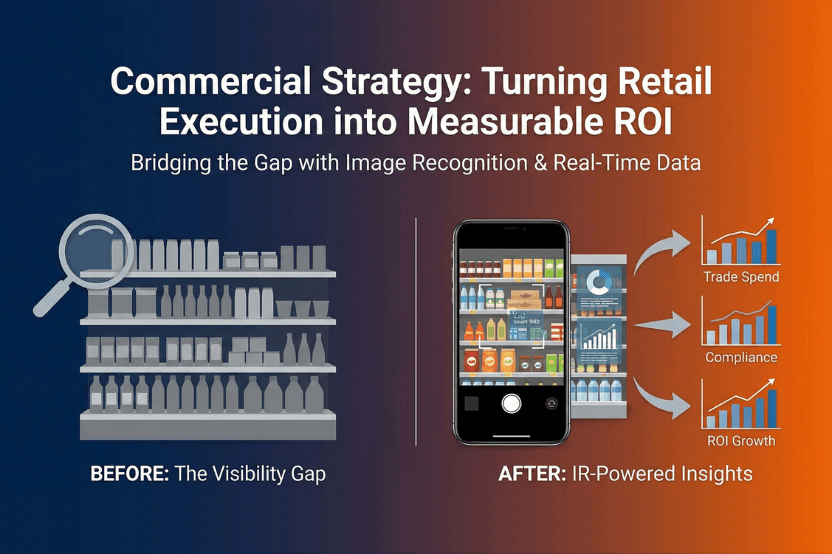
Despite unprecedented investment in analytics and data platforms, the physical shelf remains one of retail’s least visible assets. Plans are built with precision. Budgets are approved with confidence. And then execution… disappears into the field.
Or worse, it quietly fails.
The Execution Gap Is Now a Board-Level Problem
What’s changed isn’t awareness, it’s urgency.
At NRF this year, execution failure wasn’t framed as an operational inconvenience. It was discussed as a material business risk:
- Promotions that don’t execute as planned
- Displays that never make it to the floor
- Prices that drift from agreed strategy
- Out-of-stocks discovered after the moment has passed
In an environment of margin pressure and intense scrutiny on trade spend, not knowing whether strategy translated into reality is no longer acceptable.
Retail leaders aren’t asking for more dashboards. They’re asking a simpler, more uncomfortable question:
“Did what we planned actually happen?”
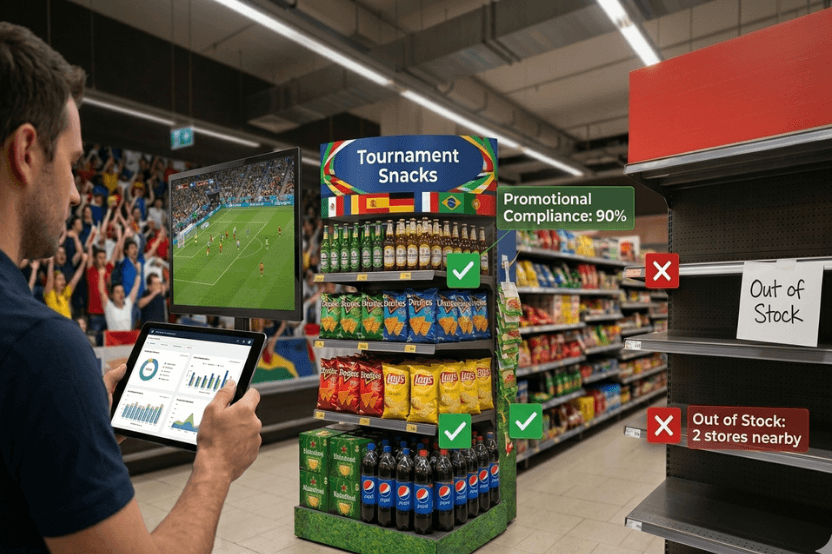
Why World Cup 2026 Keeps Coming Up
One interesting undercurrent at NRF was how often FIFA World Cup 2026 entered the conversation even when it wasn’t the headline topic.
For brands, it represents a once-in-a-generation spike in attention, footfall and trade investment across North America. For retailers, it’s a stress test: more promotions, tighter timelines, higher expectations.
And for many teams, it’s exposing a familiar concern:
“We’re about to spend more — but can we prove it executed?”
Big moments amplify existing weaknesses. When promotional windows are short and stakes are high, delayed or inferred data isn’t just inconvenient — it’s risky.
The brands that succeed during moments like World Cup 2026 won’t just be the ones with the biggest budgets or the boldest creative. They’ll be the ones who can see execution clearly, early and objectively.
Data Is Abundant. Truth Is Not.
Another strong theme at NRF 2026 was discomfort with lagging indicators.
Sales data tells you what sold — weeks later.
Syndicated data shows trends — after the fact.
Field reports tell a story — selectively.
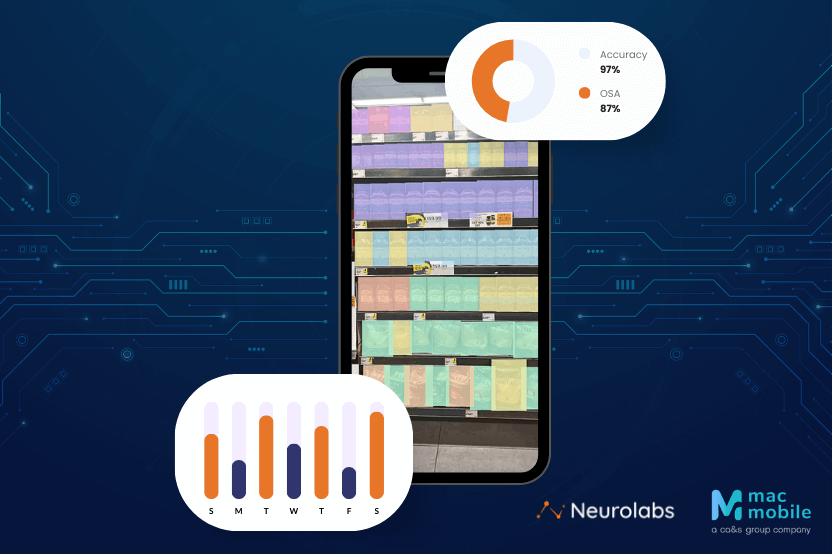
But none of these tell you what actually happened on the shelf, in the moment, at scale.
The industry is waking up to a hard truth:
you can’t optimise what you can’t see, and you can’t govern what you can’t verify.
From Insight to Control
What made NRF 2026 feel different wasn’t the technology itself, it was the expectation behind it.
Retail teams increasingly expect:
- Objective proof of in-store execution
- Visual evidence, not assumptions
- Timely insight, fast enough to act while it still matters
This marks a shift from insight to control.
From explaining results after the fact… to intervening while outcomes can still be changed.
The Competitive Edge Is Execution Truth
As retail grows more complex, the winners won’t simply be the ones with better strategy decks or more sophisticated analytics.
They’ll be the ones who can close the loop between:
Plan → Reality → Action
Those teams can protect trade spend, respond faster and walk into retailer conversations with evidence instead of opinions.
Those who can’t will keep learning expensive lessons once the window to act has already closed.
Looking Ahead
NRF 2026 made one thing clear: the next era of retail won’t be won in the boardroom or the data warehouse alone.
It will be won on the shelf, by teams who finally have visibility into what’s happening where it matters most.
The future of retail isn’t just smarter.
It’s more accountable.
And moments like World Cup 2026 will make that difference impossible to ignore.
Want To Continue the Conversation?
If you’re thinking about how to protect promotional investment, improve execution visibility or prepare for high-stakes retail moments like World Cup 2026, we’d love to compare notes.
You can get in touch with Patric or Remus, or request a demo to see how real-time, image-based execution insight works in practice.
Sometimes the most valuable insight is simply knowing what actually happened, in the moment, where it matters most.