.svg)

Synthetic Data and Digital Twins: The Future of Image Recognition in CPG
May 9, 2026
TL;DR
- Traditional IR is slow and hard to maintain, relying on vast photo datasets and endless retraining.
- Neurolabs generates synthetic data and digital twins, onboarding new SKUs in minutes.
- Use cases span shelf execution, display quality, POSM tracking, promo execution, price validation and backroom reconciliation.
- Fully integrates into existing SFA, CRM and MDM tools, eliminating the risk of disruptive tech overhauls.
- Case study: AG Barr reduced audit time by 50% while boosting rep productivity and data confidence.
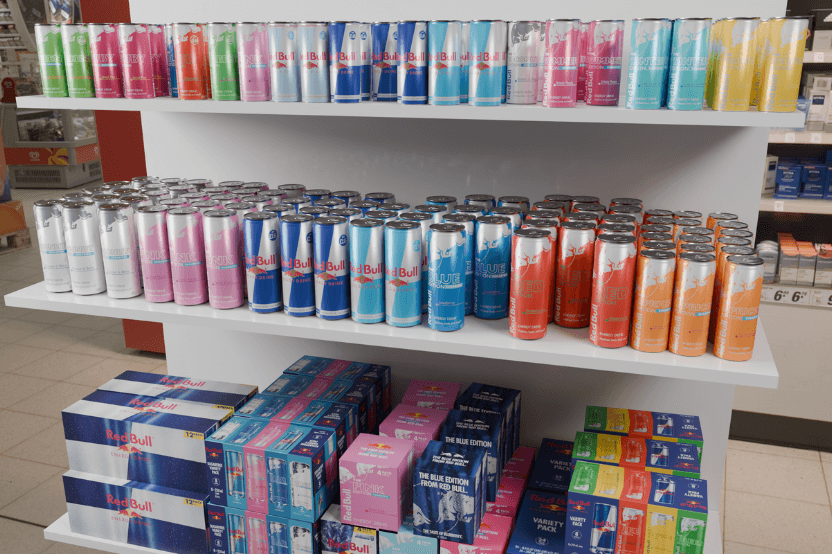
Traditional image recognition (IR) in retail depends on large datasets of real shelf photos because its models must be trained on real-world examples of how each product appears in store. While this can work in controlled settings, it’s slow, costly and struggles to adapt to change. Models need retraining every time a new SKU, seasonal pack or packaging update hits the shelf, leaving execution teams waiting weeks for accuracy to stabilise. In today’s fast-moving retail environment, that delay puts brands at a disadvantage.
What Synthetic Data Really Is
Synthetic data flips this model on its head. Instead of waiting for photos, Neurolabs generates virtual training data in limitless volumes at scale, under controlled variations: lighting, occlusions, shelf layouts, angles. This means:
- Instant SKU onboarding (new products added to catalogue and recognised in minutes, compared to weeks with legacy providers)
- Complete control of training conditions (lighting, occlusions, shelf layouts)
- Infinite scalability across categories and geographies
By creating synthetic training sets, we remove the bottlenecks of photo collection and manual labelling, making IR not just faster, but smarter.
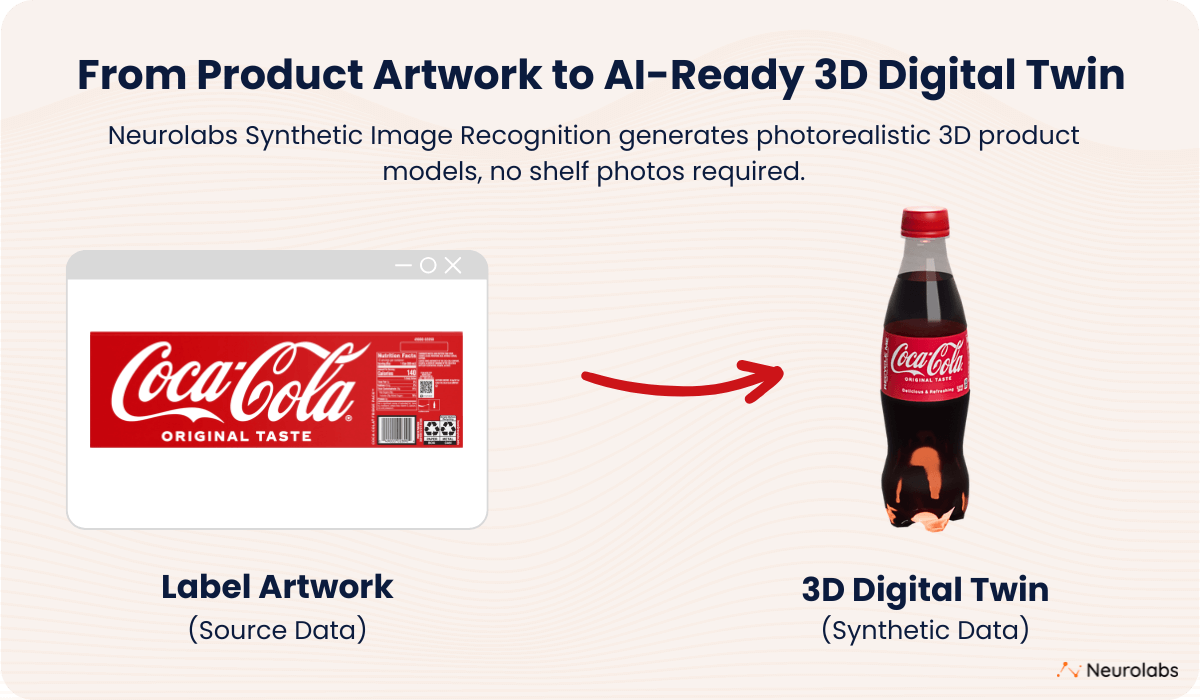
The Power of Digital Twins - a 3D Asset Is Worth Millions of Images
At the core of this approach are digital twins: pixel-perfect virtual replicas of every SKU in a catalogue. Each digital twin contains precise product attributes, dimensions and packaging details. When integrated into Neurolabs’ ontology, these digital twins make it possible to:
- Recognise SKUs with 96%+ accuracy, even in cluttered real-world shelves
- Seamlessly adapt to packaging updates or seasonal designs
- Ensure consistency across markets, categories and languages
Digital twins don’t just recognise products, they help unlock structured, reliable KPIs like Share of Shelf, On-Shelf Availability and Price Compliance including competitors.

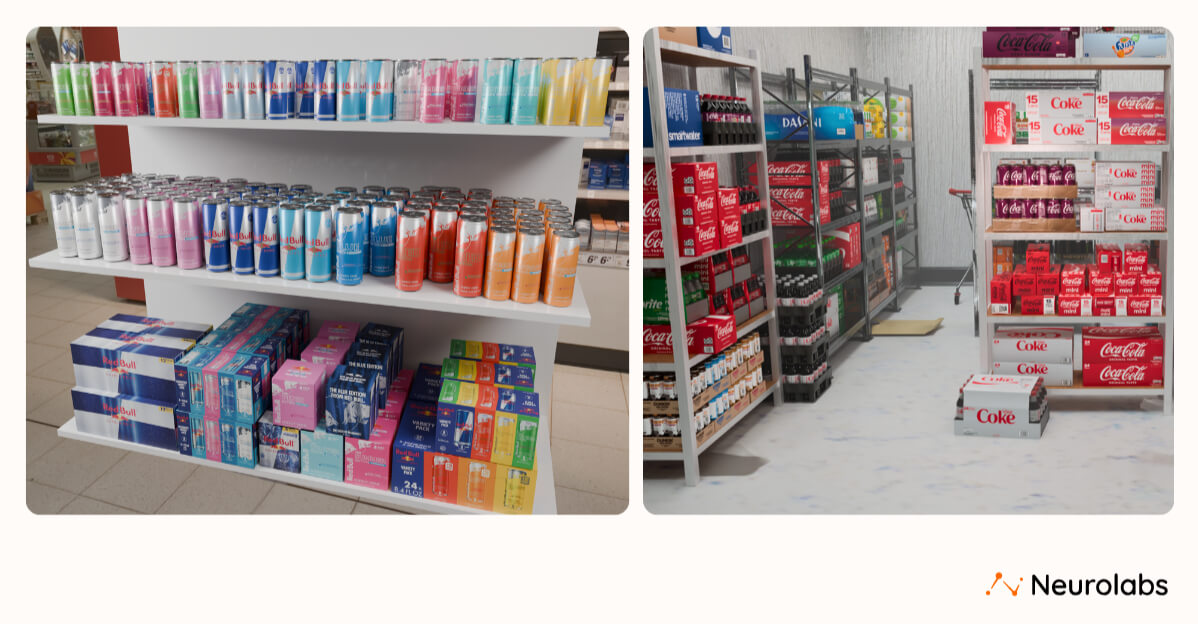
Virtual Training Environments
Beyond SKUs, we build virtual shelf environments to test models against real-world complexity. By simulating different store formats, lighting conditions and product obstructions, our models learn to excel in reality, not just theory. This means field reps capture a shelf photo and get actionable KPIs in seconds, without the fragile, error-prone retraining cycles that legacy IR depends on.

Use Cases: Where Synthetic Data + Digital Twins Deliver Value
Neurolabs’ approach powers a wide spectrum of retail execution use cases, from foundational audits to advanced category insights. A few highlights:
Level 1 – Foundational Recognition
- Display Quality Verification – Check if promotional displays are present and correctly executed.
- POSM Material Tracking – Track wobblers, shelf-strips and other POS materials for compliance and wear.
- Planogram Snapshot – Verify SKU facings and shelf placement against planograms.
- Execution Audit (3rd-party) – Provide objective benchmarks across rep or agency territories.
- On-Premise Price & Menu Capture – Detect branded products and capture menu board pricing for compliance.
- Standard Shelf Execution – Single-category SKU detection delivering KPIs like SoS percentage, OOS count, duplication errors.

Level 2 – Associative Recognition
- Promotion Execution Analysis – Validate whether promotional POSM is linked to the correct featured SKUs.
- Price–Product Validation – Match price labels with SKUs to eliminate pricing errors.
- Promotional Price Compliance – Check promo tickets and pricing depth against contracts.
Level 3 – Contextual Scene Understanding
- Backroom-to-Shelf Reconciliation – Identify gaps between stock in backroom vs. on-shelf availability.
- Advanced Shelf Execution (Whole Aisle) – Scan 1,000+ SKUs across an aisle, including competitor SoS, brand-blocking and space-to-sales ratios.
- Category-Level Pricing & Promo Intelligence – Analyse price ladders, promo mix and elasticity at category scale.
These use cases show how synthetic data + digital twins go far beyond “standard recognition.” They deliver structured KPIs that map directly to strategic levers like Share of Shelf, OSA, price compliance and promotion ROI.
Why This Outperforms Traditional IR
Compared to legacy, data and photo intensive IR approaches, Neurolabs’ synthetic data and digital twins deliver:
- Speed: Onboard new SKUs in minutes rather than weeks
- Accuracy: Robust performance even under challenging conditions
- Scalability: Global rollout and category expansion without tedious retraining
- Consistency: Uniform performance across packaging updates, categories and regions
Because the model isn’t shackled to historical images, it can easily adapt as brands, SKUs and market dynamics evolve.

“With Neurolabs, we can onboard new SKUs in a fraction of the time it used to take. What once required weeks of manual setup now happens almost instantly, ensuring our field teams have the latest products at their fingertips. It’s a game-changer for catalogue management and keeps us agile in a fast-moving market.”
Zoe Park, Catalogue Manager, AG Barr
Integration, Not Disruption
One of the biggest concerns for CPG leaders is the risk of tech disruption. Many IR providers demand a wholesale replacement of existing systems. Neurolabs takes a different path. Our Visual AI integrates seamlessly into existing SFA, CRM and MDM (Master Data Management) tools:
- No downtime for field teams
- No risky platform overhauls
- No loss of historical data
- Quick deployment
In short, brands can power up their current stack with future-proof IR without rebuilding their infrastructure. See our take on the pros and cons of a packaged vs. integrated IR strategy.
The Neurolabs Advantage
Leading CPG brands are already reaping the benefits:
- AG Barr, one of the UK’s most iconic drinks manufacturers, best known for household brands like IRN-BRU, Rubicon and Barr Flavours, cut audit time by 50% while boosting execution quality thanks to real-time, accurate insights.
- Global beverage brands increased shelf visibility and sales uplift with faster, more accurate SoS tracking.
- Promotional ROI grew by up to 20% for brands that measured execution in real time.

“Neurolabs transformed our field operations: faster, more accurate and fully digitised. Our reps spend more time selling and we have far greater confidence in our data.”
Keir Stewart, Head of Performance Analytics, AG Barr
The Future of IR Is Synthetic
Synthetic data, digital twins and virtual environments aren’t a future aspiration; they’re delivering measurable impact today. Legacy IR is fragile; Neurolabs is future-proof.
As retail grows more complex and competitive, synthetic data and digital twins will be the foundation of every winning CPG strategy and Neurolabs is leading that future.
If you want to power up retail execution without downtime, risk or endless retraining, it’s time to explore what synthetic data can do for you. Book a demo today and see how Neurolabs can help you unlock the future of Image Recognition in CPG.
FAQs
What is synthetic data in retail image recognition?
Synthetic data is artificially generated training data that replicates real-world conditions at scale. It removes the need for vast photo libraries and allows instant onboarding of new SKUs.
How do digital twins help CPG brands?
Digital twins are precise virtual replicas of SKUs. They make recognition faster and more accurate, while unlocking KPIs like Share of Shelf, OSA, promo compliance and more.
Can Neurolabs integrate with existing SFA tools?
Yes. Neurolabs plugs directly into existing SFA systems, meaning brands can upgrade their IR capabilities without downtime or replacing their tech stack.
Why is this better than traditional IR?
Legacy IR is fragile, slow to adapt and dependent on endless retraining. Neurolabs’ synthetic-data approach is faster, more accurate and scalable across global markets.




.svg)
Get the latest Execution Intelligence news and resources direct to your inbox
Industry insights, retail intelligence and field-tested execution playbooks, so you always know what's happening in store.
.png)

.svg)

© 2026 Neurolabs. All rights reserved

