

The Perfect Store Is a Commercial Target, Not an End-of-Quarter Scorecard

November 26, 2026
A perfect store is worth real money. When the right products sit on the right shelf at the right price with the promotion live, that store sells more. That’s the commercial case behind every perfect store programme in CPG. The problem is rarely the ambition, it’s got to do with the timing. Most perfect store scoring lands weeks after the visit has taken place, long after the shelf has moved on so you end up grading a week you can no longer change.
For a brand running a perfect store programme across thousands of outlets, that lag is not a reporting quirk, it’s lost volume. A store that fell short in week one of a promotion stays short until someone notices and by then the feature is over, the score goes up on a slide and the sale never happened.
What a perfect store programme is really measuring
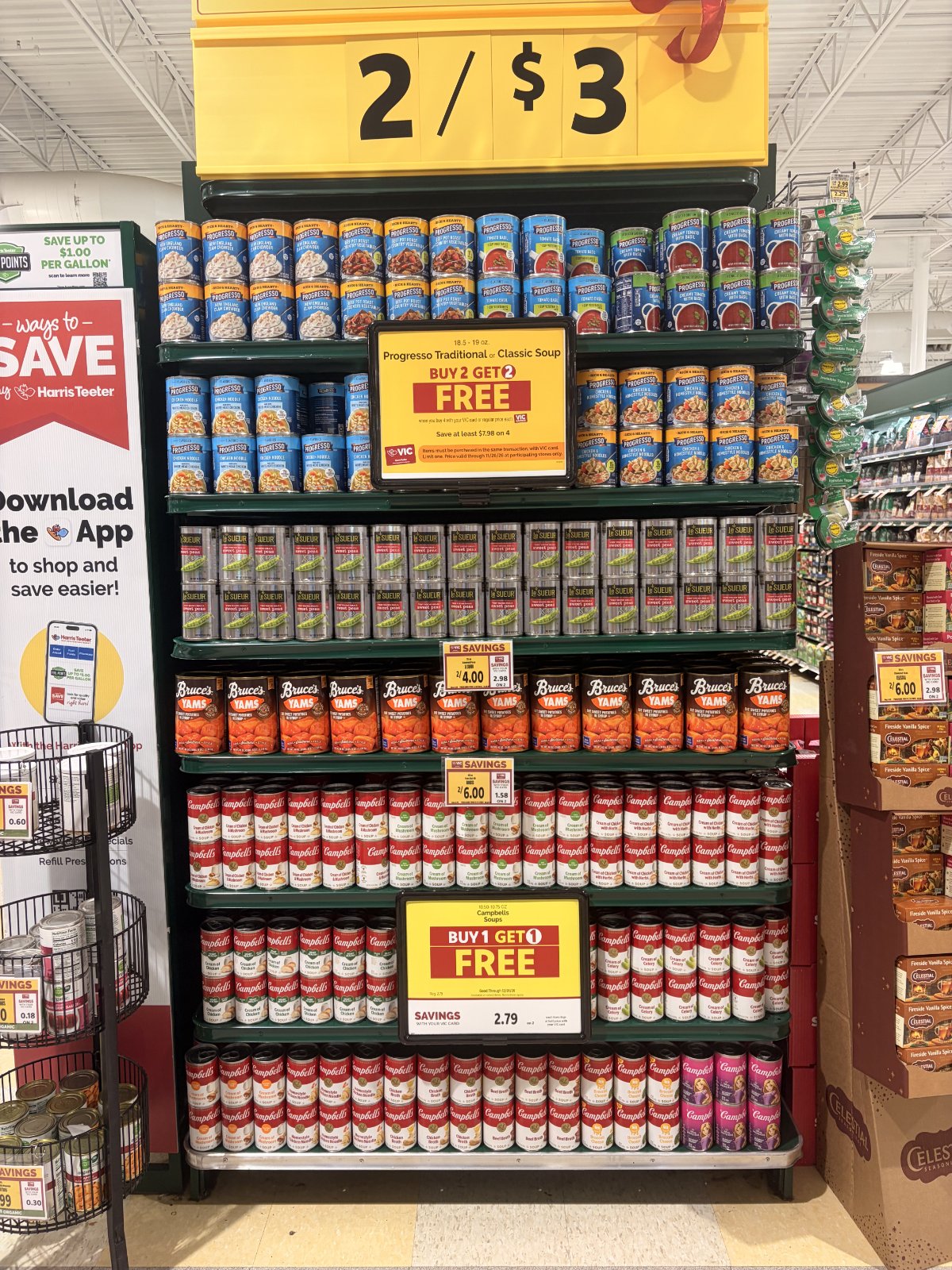
Strip away the branded name, whether your business calls it a perfect store, a picture of success or PICOS, and the programme measures one thing: whether the shelf in front of the shopper matches the plan your commercial team agreed, or where there isn’t one, the standard your best stores already hit. Is the full range on shelf and in stock? Is your fair share of space held? Is the price at the shelf edge the price you signed off? Is the promotion built and live in the stores you funded? Are the end caps, displays and coolers you paid for set up the way you agreed?
Each of those is a lever on the same number, the volume that store can sell this week. A perfect store target turns an abstract commercial plan into a physical checklist for the aisle. That’s why the concept has stuck across CPG. It gives field, trade marketing and account teams one shared definition of what good looks like.
The gap is not in the definition, it’s in the proof. A target you cannot verify quickly is a target you manage on trust and trust is expensive when it is wrong.
Why the perfect store scorecard arrives too late
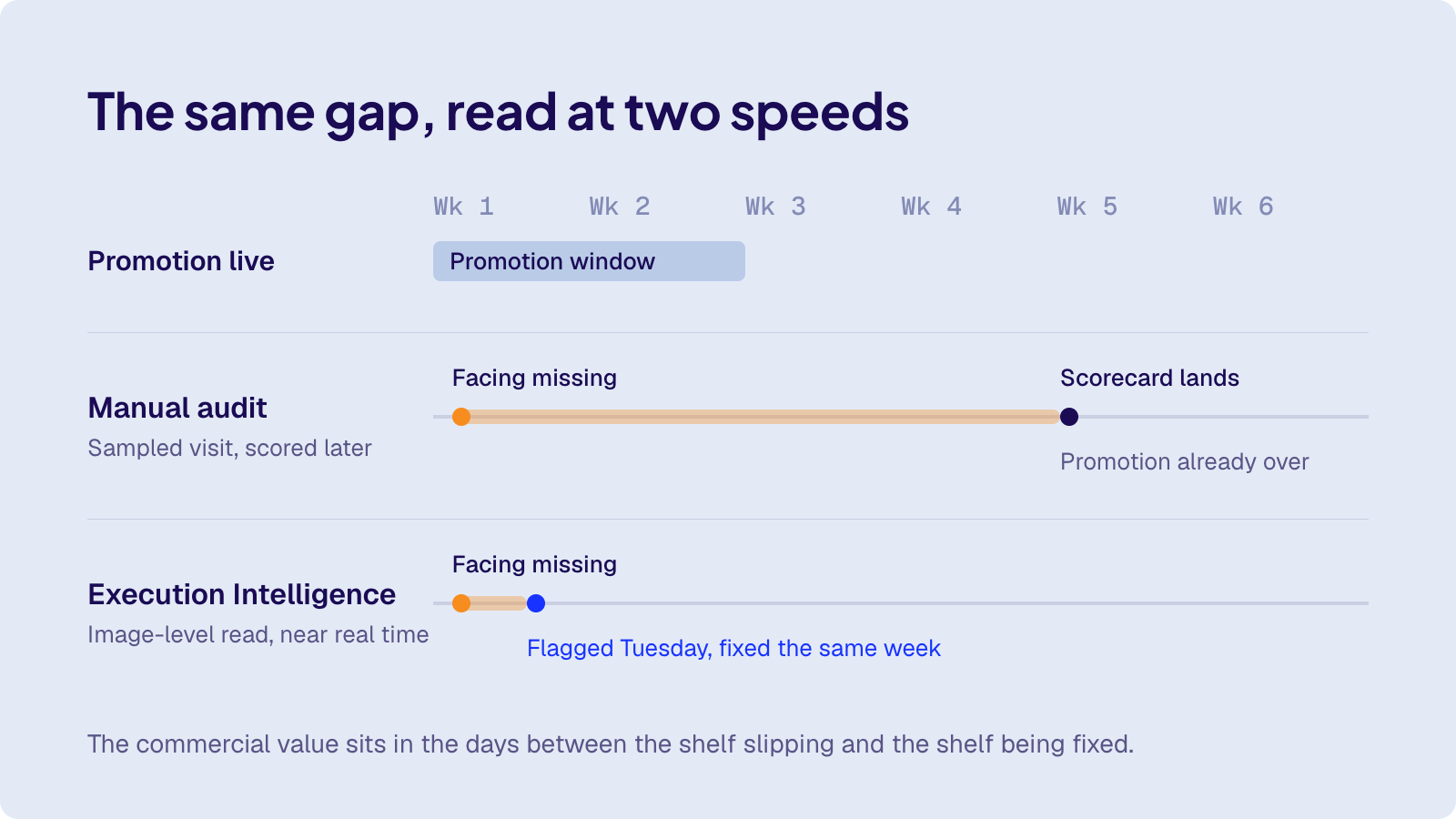
Most perfect store scoring still runs on manual audits. A field rep walks a fraction of stores, fills in a checklist then the data trickles back over the following weeks. By the time the scorecard is built, the trading period it describes has closed and you are reading a report about sales you can no longer influence.
The CPG teams we speak to describe the same lag in different forms. One brand's manual review of its secondary displays runs about two weeks behind, so corrections land after the display has come down. Another gets its store check scores a month after the visit. A bottler audits cold vault space by hand in Excel at around 40 minutes per store. Meanwhile reps take dozens of photos per visit that nobody has time to review.
This is the pattern across most retail execution reporting, not just perfect store. Years of delayed data have trained CPG teams to treat the audit as a post-mortem. The store either hit the standard or it did not, the quarter is graded then everyone moves on to the next cycle. Nobody expects to fix the shelf while the shopper is still standing in front of it.
That expectation is the real cost. A missing facing spotted on the Tuesday can be recovered inside the same week. The same gap reported next month is just a lower score in a deck. The commercial value of a perfect store programme lives almost entirely in the days between the shelf slipping then the shelf being fixed.
Where the perfect store target quietly slips
Perfect store scores rarely collapse in one dramatic miss. They erode through five familiar gaps that repeat across an estate.
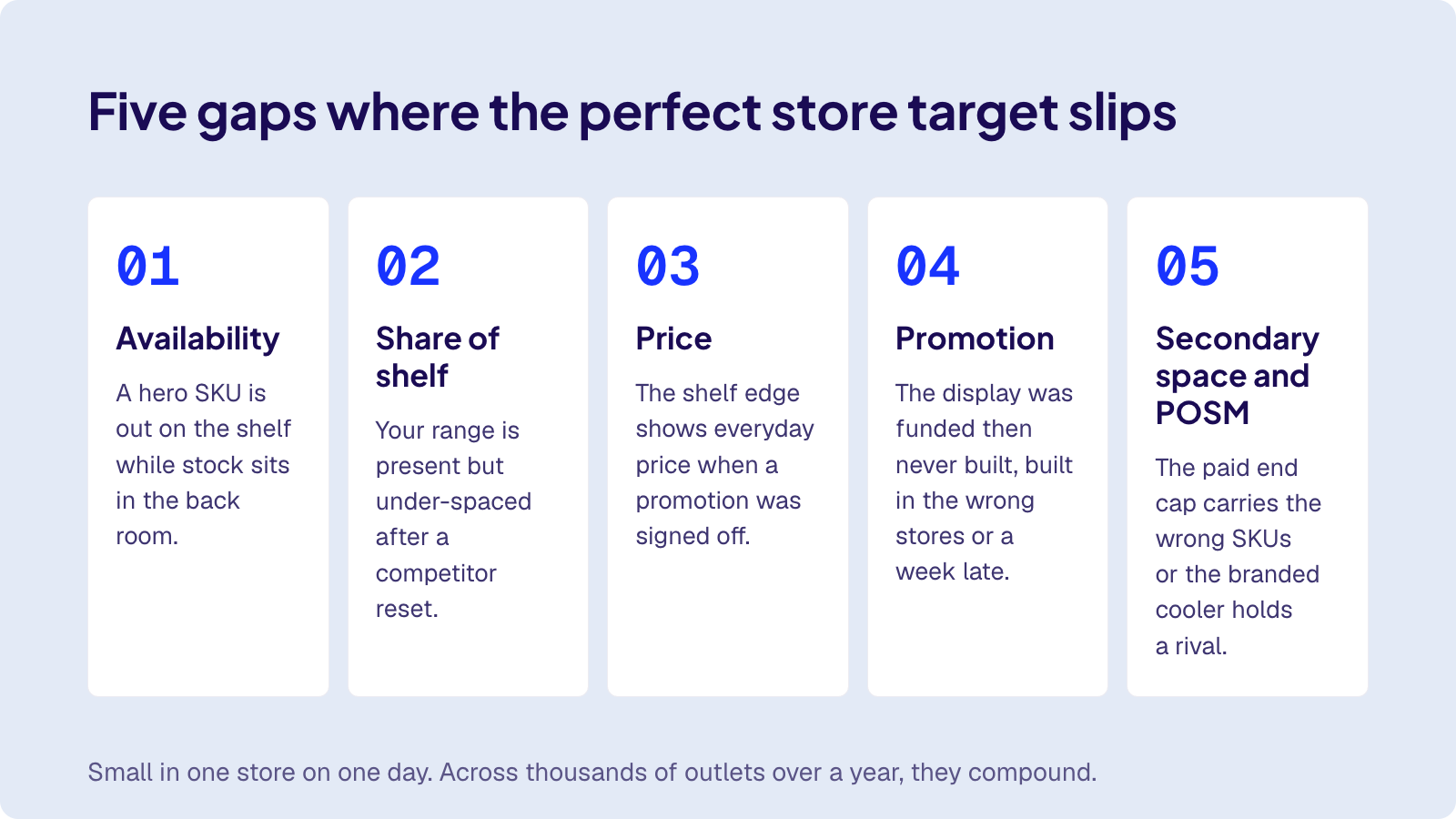
Availability first. A hero SKU goes out of stock on the shelf while stock sits in the back room. The shopper sees a hole, buys a rival then the perfect store score drops for a reason no plan predicted. On-shelf availability is usually the single biggest driver of lost volume in the aisle.
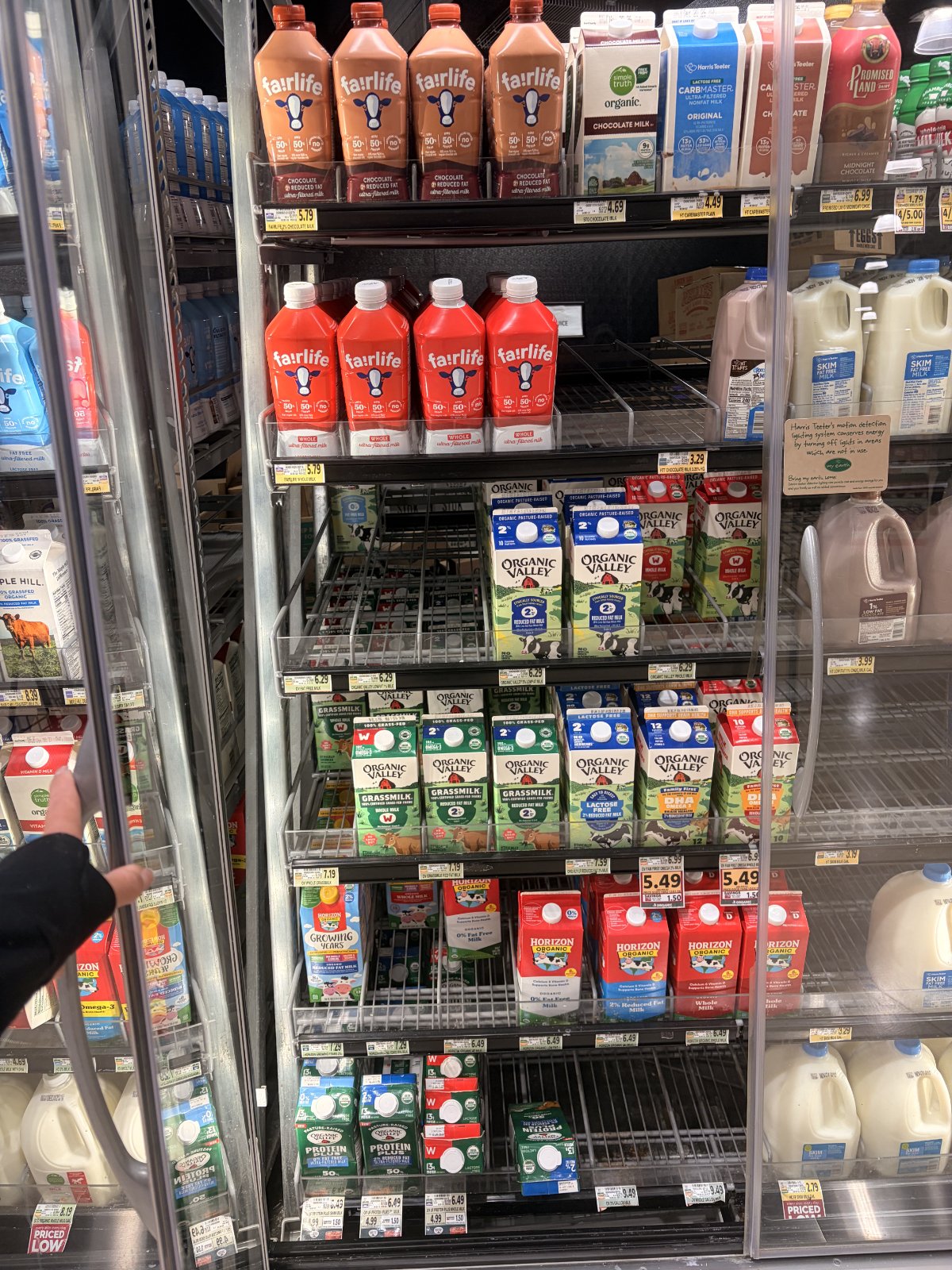
Share of shelf second. Your range is present but under-spaced, squeezed by a competitor reset or a lazy re-merchandise. You are on shelf but not at the share you paid for, so the volume follows the space you lost.
Price third. The shelf edge shows everyday price when a promotional mechanic was signed off. The offer exists on paper but the shopper never sees it, so the lift never comes.
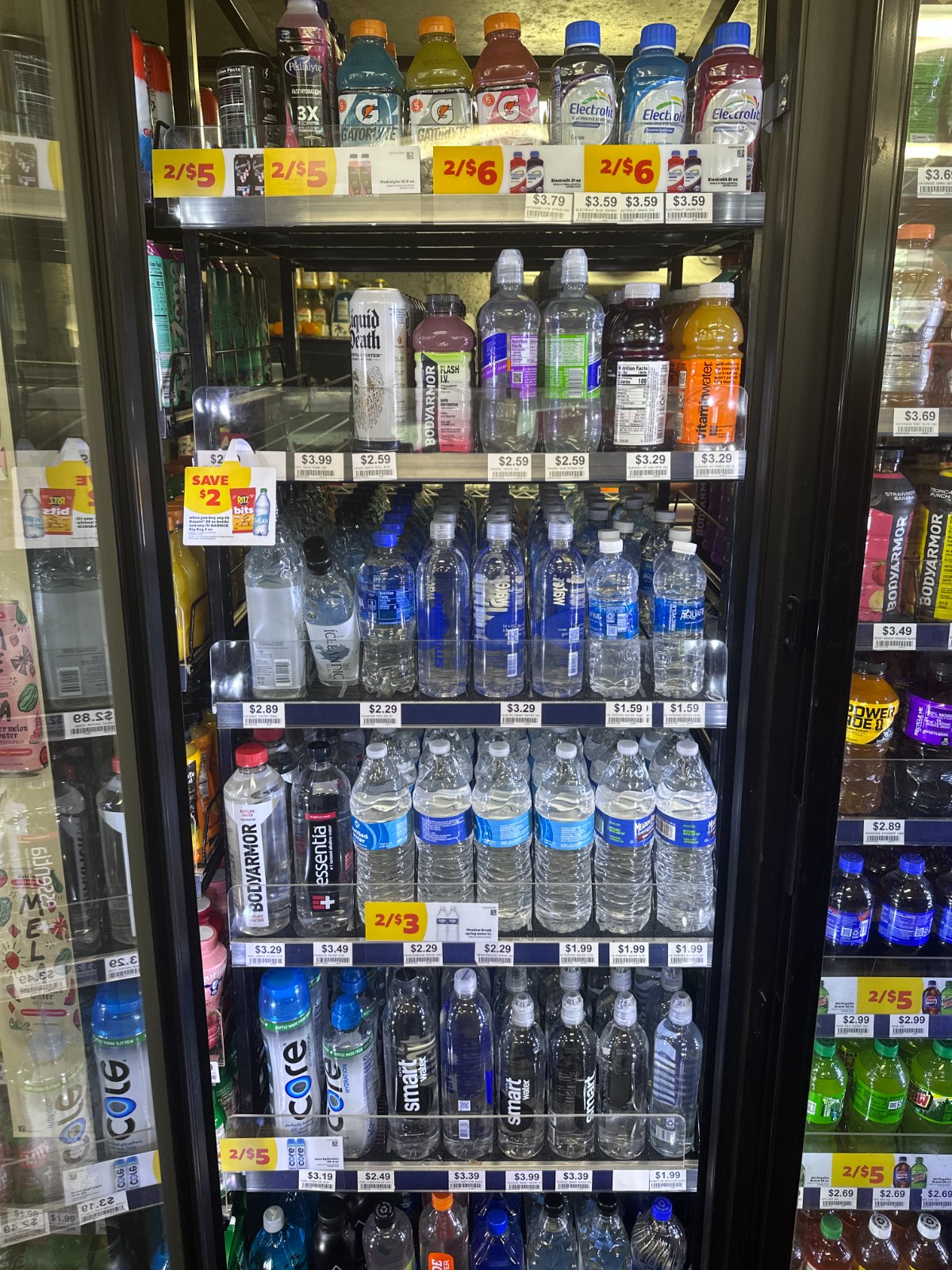
Promotion fourth. The display was funded then never built, or it went up in the wrong stores, or a week late. This is where ROI from point-of-sale displays leaks fastest, because the money is already committed before anyone checks the unit is standing.
One CPG we spoke to manages more than 2,000 promotion files a month and still cannot say which in-store activity drove the result.
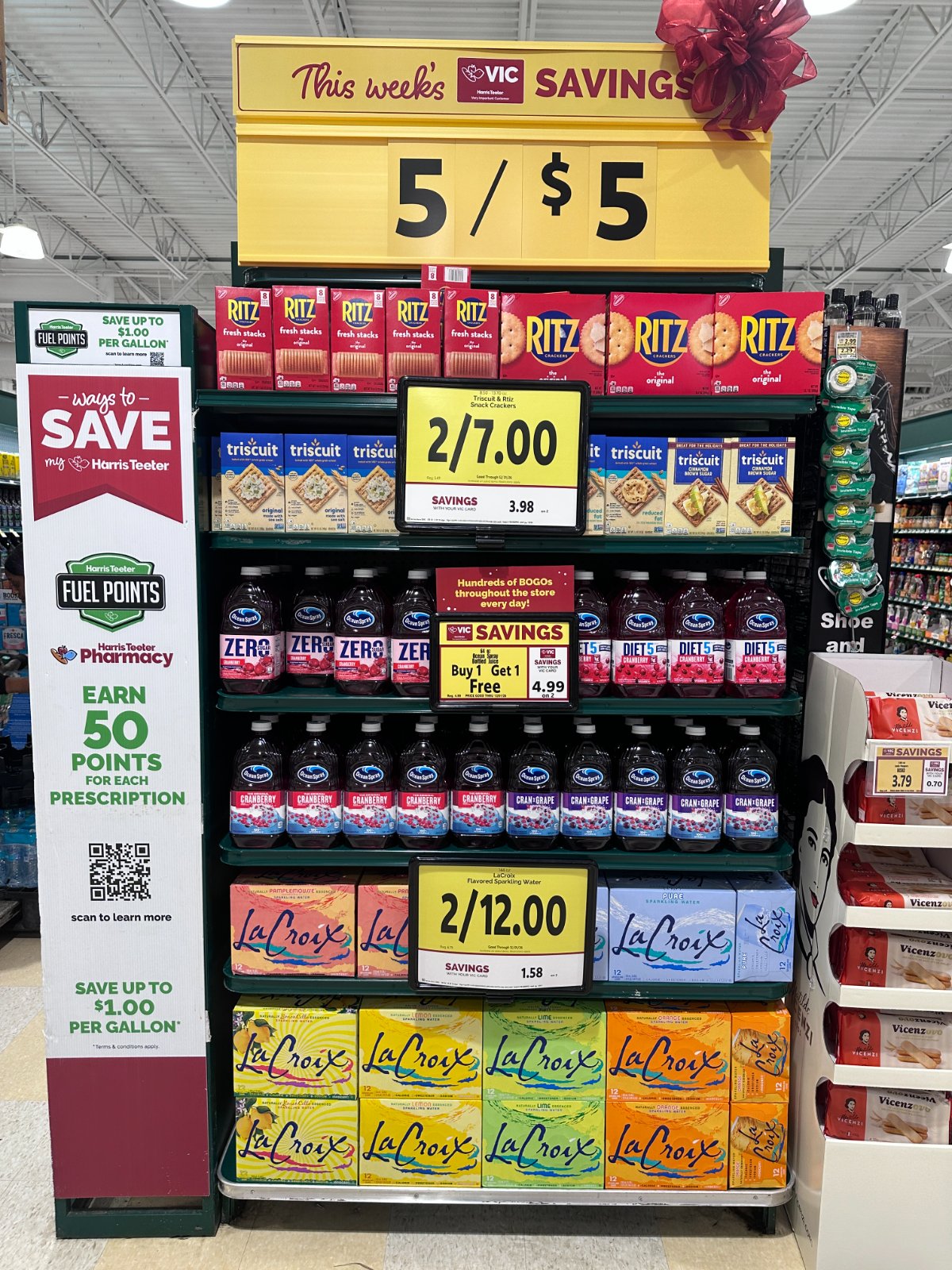
Secondary space and POSM fifth. A large share of trade spend is activated off the base shelf: end caps, gondola ends, FSDUs, shippers, branded coolers and the POSM that sits on them. A paid end cap carrying the wrong SKUs, a branded cooler stocked with a rival's product or a display missing its signage all pass a base shelf check unnoticed. The spend is specific, the read is not.
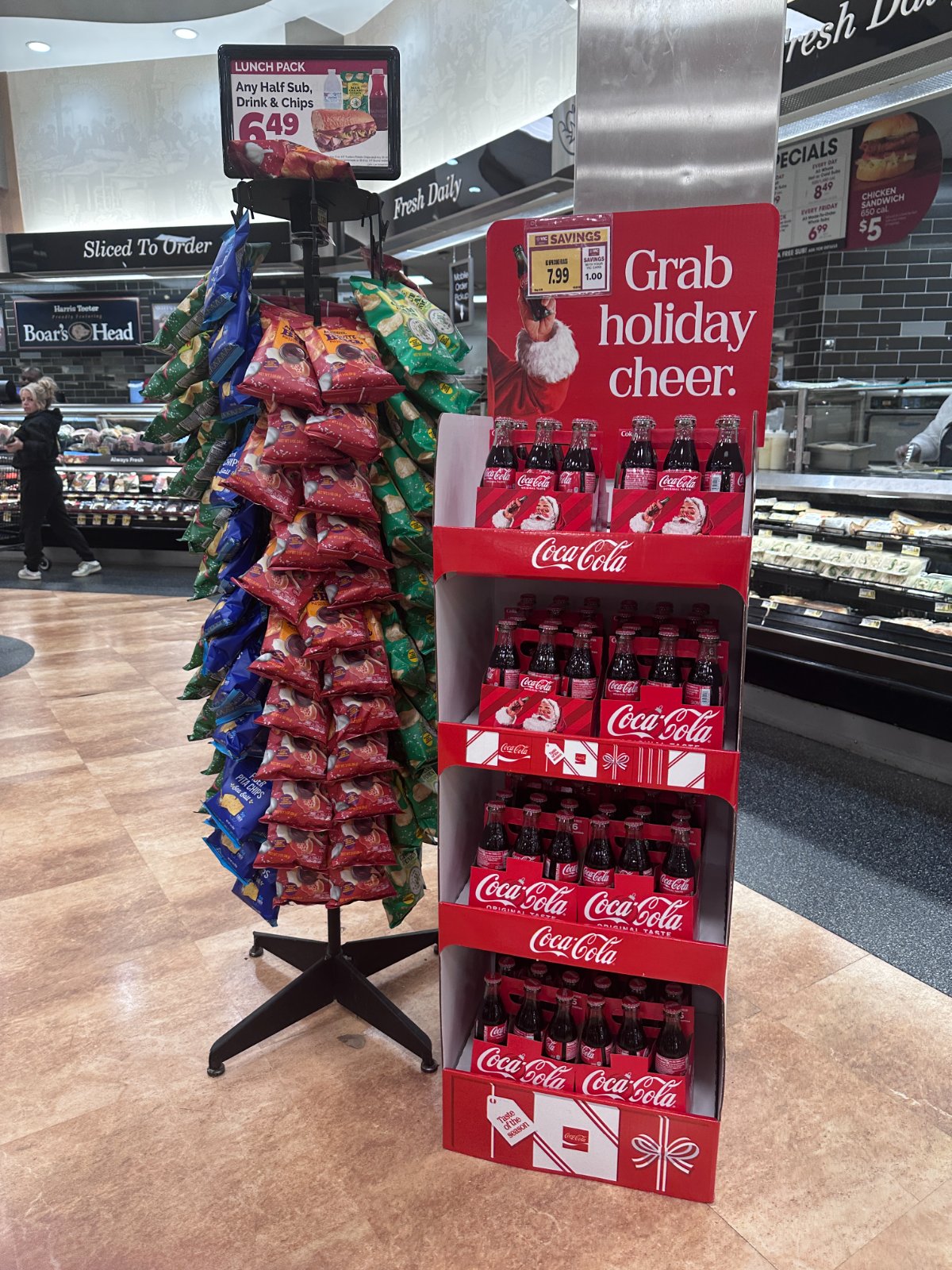
Each is small in one store on one day but across thousands of outlets over a year they compound into a serious problem on the volume your perfect store programme was meant to protect.
When there is no planogram to measure against
The classic perfect store assumes a planogram. Many estates don’t have one that holds. One convenience chain runs thousands of store-level planograms. At another, franchisees don’t follow one at all. In traditional trade there was never a plan, and brands that sell through agencies or rely on retailer-owned planograms don’t control the layout.
Image recognition can work backwards. It captures the realogram of every store it reads, what the shelf actually looks like, then compares stores against each other so the standard comes from your best-performing outlets rather than a planogram nobody maintains. You learn the plan from the shelves that are already selling.
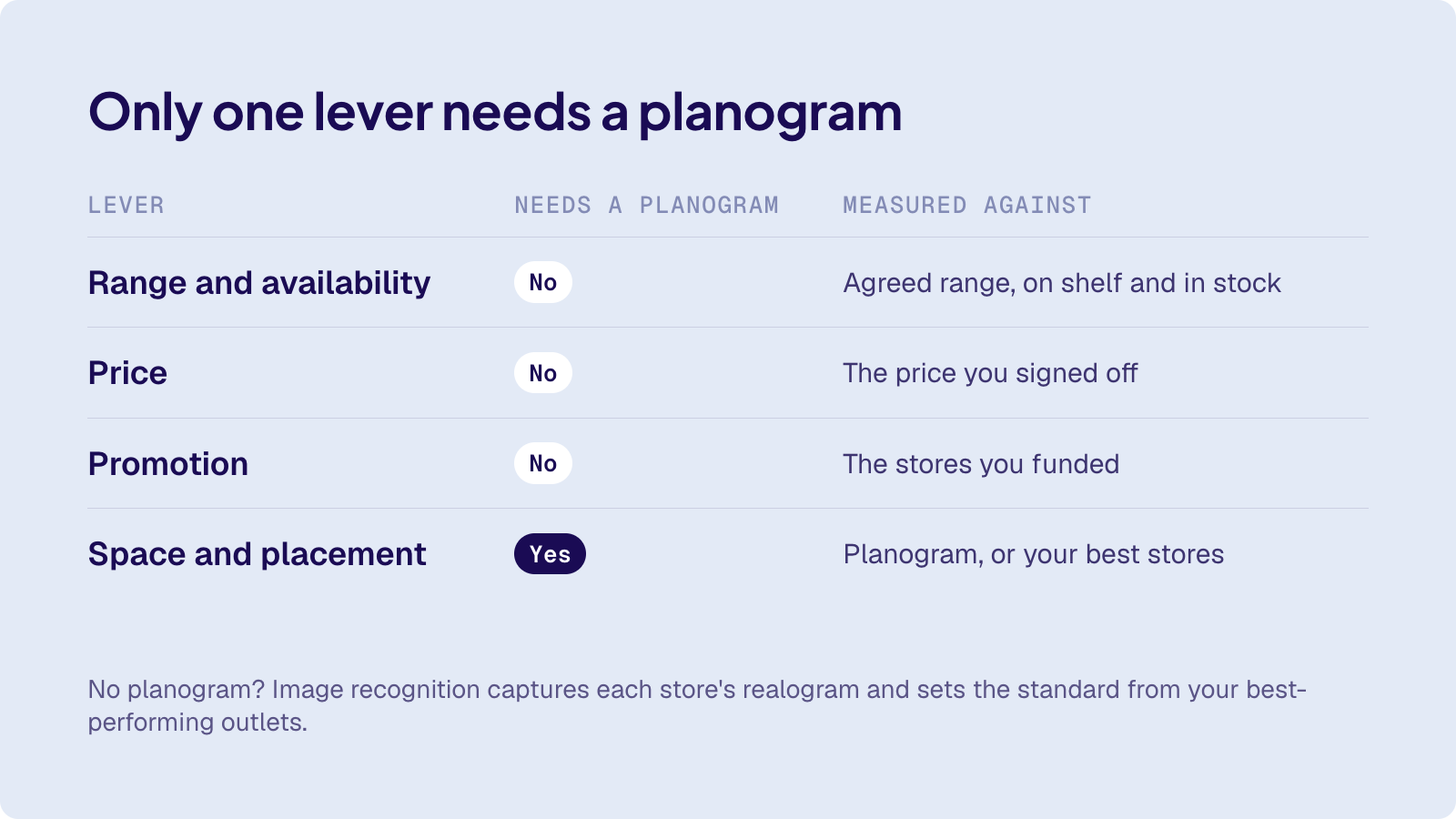
It also helps to know which parts of the picture of success need a plan at all. Of range, availability, space, price and promotion, only space and placement need a planogram. Availability, price compliance and promotion presence can be checked without one, so a brand with no planogram programme can still start measuring the levers that move volume this week.
What in-store execution looks like when you can act in time
The point of a perfect store target is not the score, it’s the sale the score stands in for. That means the programme has to shift from grading in-store execution after the fact to managing it while the window is still open.
Three things separate a programme that recovers volume from one that only reports on it.
Evidence. Image-level proof of what was on the shelf, store by store, ends the debate about whose number is right. It turns a perfect store review from an argument into a decision. Brands that walk into a retailer meeting with proof hold their partners accountable.
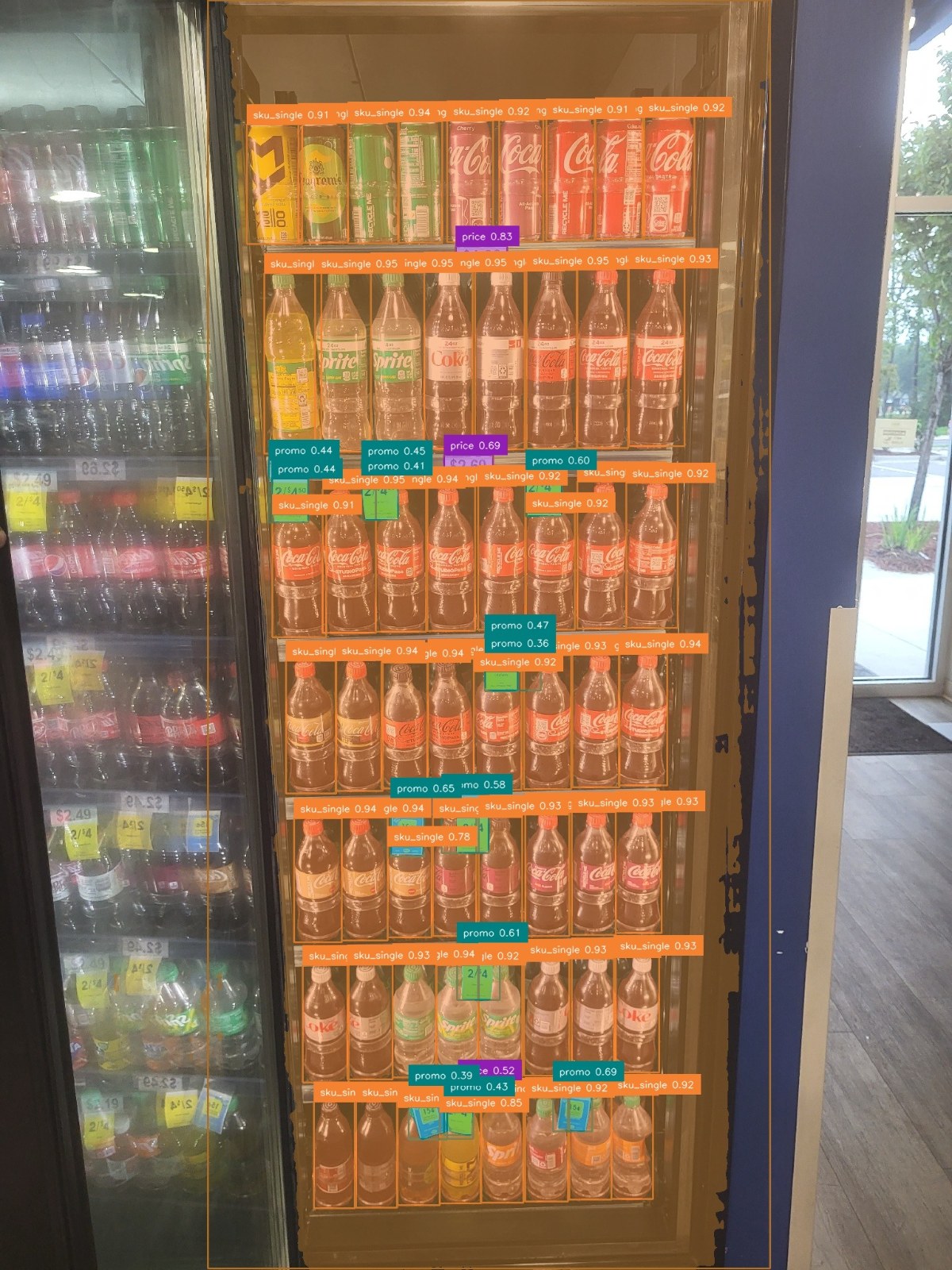
Coverage. A perfect store programme is a promise across your funded estate, yet the stores no rep visited are exactly where execution slips unseen. Reading every outlet by hand is neither realistic nor economic. Image recognition makes each visit faster, so the same team covers more ground, and it pulls evidence from outlets a rep would rarely reach. Moving from a confident guess built on a handful of visits to a wider read you choose, not one you settle for, is the shift from smarter audits to real retail execution.
Speed. A gap flagged while the promotion is live can still be closed. The same gap next quarter is a number in a loss column. That move, from measuring stores after the fact to managing them as they trade, is the point of Execution Intelligence: the layer between what your commercial team planned then what the shelf actually delivered, in time to act. We use the term near real time deliberately. Quick enough to get the shelf fixed while it still sells.
The brands pulling ahead are not the ones with the most detailed perfect store scorecards. They are the ones who saw the facing was missing while the shopper was still in the aisle then fixed it. A perfect store target is only worth the volume it recovers. Volume is only recovered while the window is open. See how it works.
FAQ
What is a perfect store programme?
A perfect store programme sets a single standard for what a shelf should look like in a given store: the right range on shelf and in stock, your fair share of space, the agreed price at the shelf edge, the promotion built and live then secondary displays and POSM in place. It gives field, trade marketing and commercial teams one shared definition of good execution, measured store by store.
Why do perfect store scores often fail to lift sales?
Because the score usually arrives after the trading period it describes. Manual audits sample a few stores then report back over weeks, so gaps are graded rather than fixed. The commercial value sits in acting while the shelf can still be corrected, which delayed scoring throws away.
How can brands measure perfect store compliance in near real time?
By replacing sampled manual audits with image-level verification across a wider, better-chosen set of stores, read quickly enough to act on. That widens coverage beyond a thin sample to the stores that matter most, evidence of what was actually on the shelf then the speed to fix a gap while the promotion is still live.
What is a picture of success (PICOS)?
Picture of success, often shortened to PICOS, is the name many CPG and bottler teams use for their perfect store standard. It describes what good execution looks like by channel and store type, from range and shelf position to coolers, displays and POSM, and gives reps a visual reference to score each visit against.
Can you run a perfect store programme without a planogram?
Yes. Availability, price compliance and promotion presence can all be measured without a planogram. For space and placement, image recognition captures the realogram of each store then sets the standard from your best-performing outlets, so the plan is learned from the shelves already selling.
Want to see whether your stores actually hit the standard while you can still act on it? Request a walkthrough then we will show you the volume your current perfect store reporting cannot account for. See how it works.

Related Resource


Get the latest Execution Intelligence news and resources direct to your inbox
Industry insights, retail intelligence and field-tested execution playbooks, so you always know what's happening in store.



© 2026 Neurolabs. All rights reserved

