.svg)

Measuring Image Recognition Maturity in CPG: From Quick Wins to Strategic Value
May 9, 2026
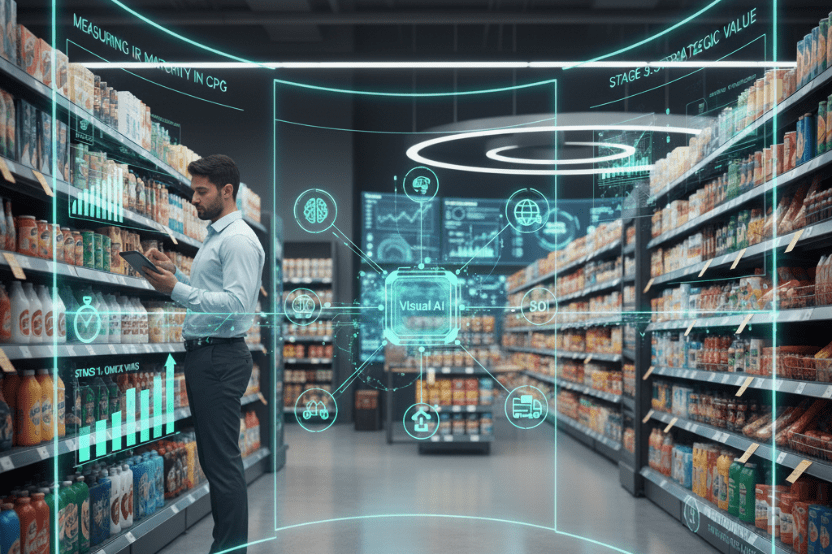
The way Consumer Packaged Goods (CPG) brands use Image Recognition (IR) has changed dramatically over the last five years. What began as a tactical tool for faster shelf audits has become a critical enabler of retail execution, supply chain efficiency and commercial strategy.
But not all brands are at the same stage of this journey. Some are still capturing value in the form of time saved by field reps, while others are using IR data to drive predictive insights across global markets.
So, how do you measure IR maturity? And where does your organisation sit on the curve?
Why IR Maturity Matters
Every CPG company is under pressure to do more with less: fewer resources, tighter budgets, more competition. Traditional audits and manual processes slow down decision-making and often leave executives flying blind when it comes to shelf reality.
IR solves this problem but its true value depends on how deeply it’s embedded into the business. Early adopters may celebrate quicker compliance checks, but the most mature organisations transform IR into an infrastructure layer that connects the shelf to supply chain, commercial and RGM (Revenue Growth Management) teams.
You can read more about how IR acts as a strategic lever in retail execution here.
Stage 1: Foundational Adoption – Quick Wins
The starting point for most CPGs is operational efficiency. At this level, IR is applied to obvious front-store tasks:
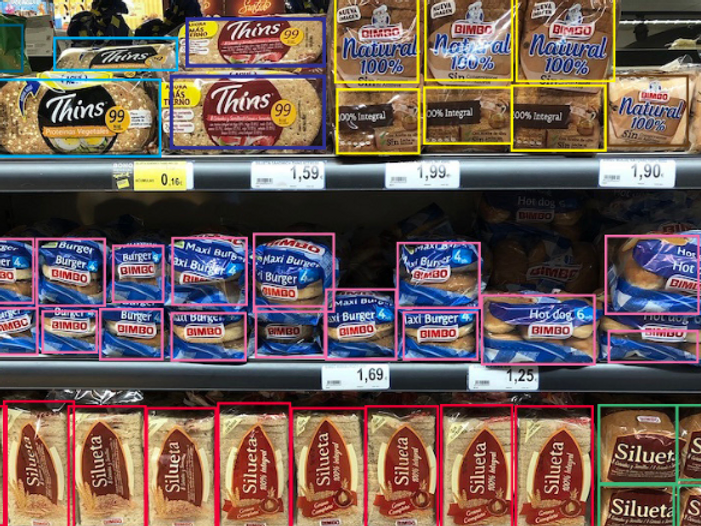
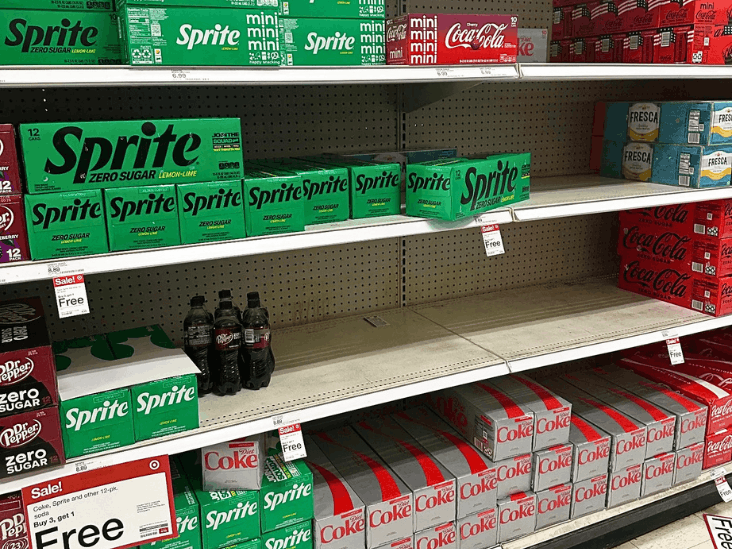
- On-shelf availability – detecting gaps faster than manual audits.
- Planogram compliance – ensuring shelves match layouts.
- Audit execution – reducing errors and cutting reporting delays.
- Field productivity – reps save hours per week on manual data collection.
This stage delivers rapid ROI by improving speed and consistency. It’s the foundation, but it’s just the beginning.
Stage 2: Integration into the Tech Stack
Maturity grows when IR stops being a standalone app and becomes a layer in the broader CPG ecosystem.
- Can IR plug into SFA tools, CRM systems, BI platforms or MDM/Data Lakes?
- Is there robust API/SDK support to feed insights seamlessly into existing workflows?
- Is it platform-agnostic and built for the real world, empowering global field teams to capture data seamlessly on any device?
At this stage, IR data no longer lives in a silo. It flows across systems, informing both execution and strategic decision-making.
Explore how IR fits into the wider CPG tech stack.
Stage 3: Dynamic Catalogue & Fast Onboarding
Another hallmark of IR maturity is how product data is managed, and specifically, how the catalogue evolves.
In most IR systems, the catalogue is treated as a static reference dataset. It serves as a lookup table used to train models to recognise SKUs. Once deployed, it often sits in the background, updated manually and slowly. This approach ties system performance to the accuracy and quality of the underlying data and that is where traditional IR reaches it limit.
With Visual AI, the catalogue becomes something entirely different: a living, dynamic component of the ecosystem. Rather than being a one-way input, it is constantly enriched by real-world visual data, detecting packaging variations, validating metadata and even discovering unlisted (products that appear in-store before being added to the official catalogue) or regional SKUs (local or market-specific variations of existing products).
This evolution also transforms how the catalogue connects to a CPG’s Master Product Catalogue (MPC). In a dynamic setup, Visual AI acts as the bridge between what is seen in stores and what is known in systems, feeding validated, up-to-date visual information directly into the MPC and related data layers.
At Neurolabs, this shift is powered by our ZIA Synthetic Catalogue, built on digital twins and synthetic data. It enables the onboarding of more than 1,000 SKUs per week with 95% or higher accuracy from day one, meaning models can be trained and deployed before new SKUs ever hit the shelf.
The result is a living source of truth for both recognition and analytics, where every new product, packaging change or campaign asset automatically strengthens the system and enhances the organisation’s overall retail exection intelligence.
This capability does not just accelerate time to market; it redefines how CPGs manage product data at scale, turning what was once a back-end lookup table into a strategic asset that fuels commercial agility and innovation.
Stage 4: Expanding Use Cases Beyond the Shelf
Once the basics are mastered, IR expands across more complex use cases:
- Promotional and display compliance – tracking campaign execution in real time.
- Field force optimisation – reps receive “next best action” guidance to drive sales.
- Backroom inventory visibility – spotting phantom stock or OOS root causes.
- Route planning – optimising visits by linking shelf insights to territory strategy.
These use cases tie execution directly to outcomes including trade ROI, innovation success and sales uplift.
Stage 5: Strategic Insights & Predictive Analytics
At advanced levels, IR stops being “just eyes in the field” and becomes the engine for predictive strategy.
- RGM and TPM teams use IR data to model promotion ROI.
- Marketing uses IR data to validate display impact and optimise trade spend.
- Predictive scoring (e.g., Perfect Store models) anticipates underperformance and allows intervention before sales are lost.
- Supply chain teams close the loop between shelf signals and replenishment.
Here, IR insights shape not just reporting but forward-looking decision-making across the organisation.
Stage 6: Scale and Global Deployment
True maturity means IR works everywhere and at scale:
- Millions of images processed annually.
- Multiple markets, categories and product ranges covered.
- Consistent accuracy at or above 95%.
- White-labeled for seamless use by global field teams.
At this stage, IR becomes embedded infrastructure, enabling a single source of truth across the business.
Stage 7: Innovation & Future-Proofing
The most advanced CPGs look ahead, not just at today’s problems. Mature IR programmes demonstrate:
- Continuous innovation – a clear roadmap addressing evolving industry needs.
- Offline capabilities – resilience in real-world retail environments.
- Transparent pricing and data ownership – avoiding vendor lock-in.
- Unified catalogues and raw data access – empowering internal analytics teams.
This is where IR stops being a tool and becomes a strategic differentiator.
Benchmarking Your Maturity
Where does your business sit on the IR maturity curve? Ask yourself:
- Are we still focused on speed and compliance, or are we tying IR to ROI levers?
- Can our IR solution integrate across the tech stack, or is it siloed?
- Are we proactive in onboarding SKUs, or reactive?
- Do we use IR data for reporting only, or for predictive strategy?
- Can we accurately identify seasonal and promotional materials the minute they hit the shelf, ensuring campaigns are tracked and optimised in real time?
- Are we scaling across markets, or stuck in pilots?
The answers will determine whether you’re at the quick-win stage or ready to unlock strategic value.
See how smarter audits drive retail execution.
Conclusion: From Quick Wins to Strategic Value
Image Recognition in CPG is no longer a tactical add-on. It’s fast becoming the backbone of modern retail execution and commercial strategy. But its impact depends on where you sit on the maturity curve.
- Early adopters capture efficiency gains with faster audits, higher compliance and time saved in the field.
- Mid-level organisations expand use cases, integrate IR across their tech stack and start linking execution to outcomes.
- Mature leaders scale IR globally, embed it as infrastructure and leverage predictive insights to fuel revenue growth, optimise spend and strengthen supply chains.
The real competitive advantage comes when IR moves beyond operational fixes and becomes a strategic growth engine.
Ready to find out where your business sits on the curve and what it will take to unlock the next level of ROI? Book a demo with us today and start turning shelf visibility into measurable growth.

Related Resource

%20(1).png)
.svg)
Get the latest Execution Intelligence news and resources direct to your inbox
Industry insights, retail intelligence and field-tested execution playbooks, so you always know what's happening in store.
.png)

.svg)

© 2026 Neurolabs. All rights reserved

